

Introduction to Real-Time RT-PCR
Real-time reverse transcription polymerase chain reaction (real-time RT-PCR or qRT-PCR) is one of the most powerful and widely used molecular biology techniques for measuring messenger RNA (mRNA) expression in biological samples. This technology has revolutionized gene expression analysis because of its exceptional sensitivity, broad dynamic range, rapid processing capability, and high quantitative accuracy.
Compared with traditional RNA detection methods such as Northern blotting and endpoint RT-PCR, real-time RT-PCR offers significantly improved specificity and reproducibility. These advantages are particularly important in immunology, molecular genetics, oncology, virology, and biomedical research, where many biologically important proteins originate from multiple splice variants of the same transcript. The method is also highly valuable for detecting genes expressed at extremely low levels, including cytokines, transcription factors, signaling molecules, and regulatory RNAs that are often difficult to quantify using conventional techniques.
Because of its high analytical sensitivity, real-time RT-PCR has become an essential platform for studying gene regulation, disease biomarkers, pathogen detection, therapeutic response, and molecular diagnostics.
Importance of Normalisation in Real-Time RT-PCR
Despite its precision and sensitivity, real-time RT-PCR is highly susceptible to technical and biological variability. Numerous factors can influence the final quantification results, including:
- RNA degradation
- Variability in RNA extraction efficiency
- Co-purification of PCR inhibitors
- Differences in reverse transcription efficiency
- Variations in PCR amplification kinetics
- Inconsistent sample input
- Experimental handling errors
These sources of variation can significantly distort gene expression measurements if appropriate normalization strategies are not implemented.
Normalisation is therefore one of the most critical steps in real-time RT-PCR analysis. Its primary objective is to reduce experimental error and ensure that observed changes in gene expression reflect genuine biological differences rather than technical artifacts.
However, selecting an appropriate normalization strategy remains one of the most challenging aspects of quantitative gene expression analysis.
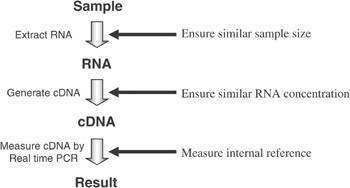
Sample Size Normalisation
Controlling Experimental Variability at the Sampling Stage
One of the earliest and simplest approaches to normalization involves ensuring that similar sample sizes are collected from all experimental groups. This may include using equivalent tissue weights, cell numbers, or blood volumes.
Although this approach appears straightforward, biological samples often vary considerably in cellular composition and physiological status. Consequently, equal sample volume does not necessarily correspond to equal RNA content or equivalent numbers of viable cells.
For example, when analyzing blood samples from HIV-positive patients, individuals with advanced immunosuppression typically possess lower CD4+ T-cell counts and therefore yield less total RNA per milliliter of blood than patients with less severe disease. Directly comparing equal blood volumes without considering cellular differences can therefore generate misleading conclusions.
Similar challenges occur in cell culture systems. Cells may exhibit variable morphology, aggregation, adherence properties, or proliferation rates depending on treatment conditions. Attempts to chemically or enzymatically dissociate cells for counting purposes can themselves alter gene expression profiles and compromise experimental integrity.
Therefore, while maintaining consistent sample size is important, this strategy alone is insufficient for accurate normalization.
RNA Quantification and Quality Assessment
Accurate RNA Measurement Prior to Reverse Transcription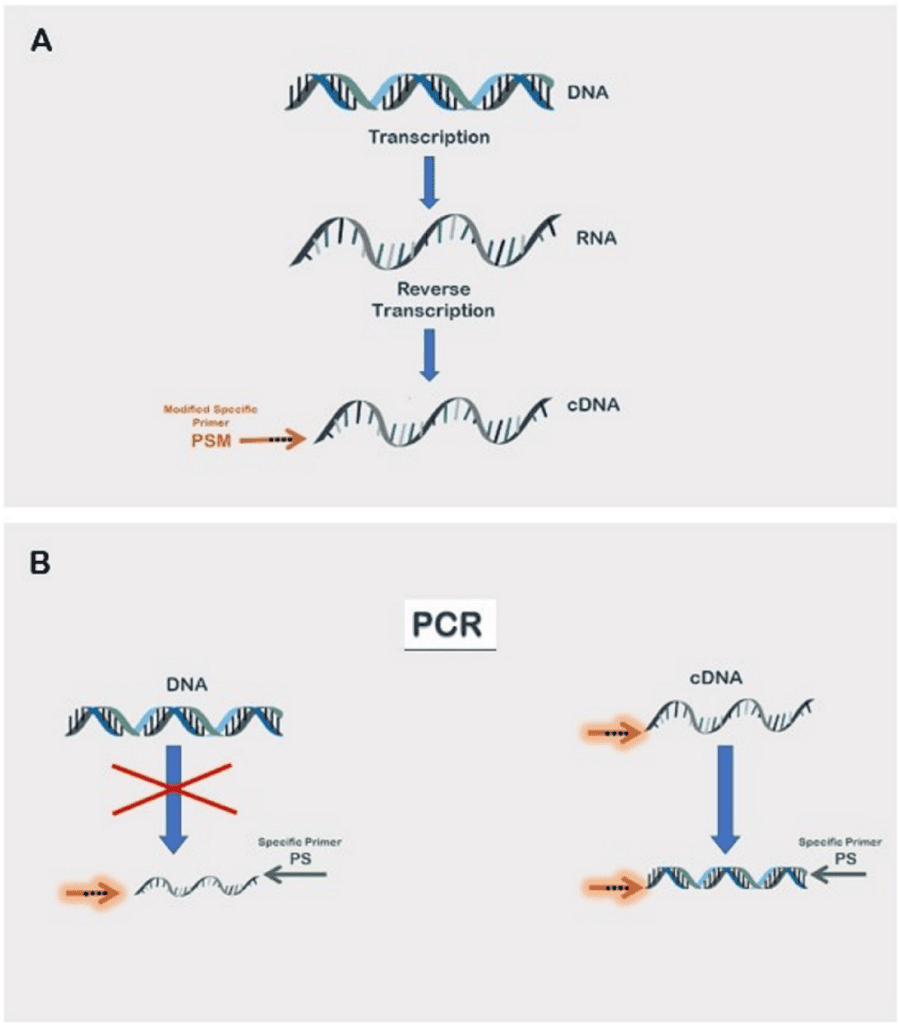
Reliable real-time RT-PCR analysis requires both accurate RNA quantification and careful assessment of RNA integrity before reverse transcription is performed.
Several analytical methods are commonly used for RNA quantification, including:
- Ribogreen fluorescence assays
- Spectrophotometric analysis
- Bioanalyzer systems such as the Agilent 2100 LabChip platform
However, RNA quantity alone is not enough. RNA quality is equally important because degraded RNA can significantly compromise reverse transcription efficiency and PCR amplification accuracy.
Poor-quality RNA may lead to:
- Reduced cDNA synthesis efficiency
- Variable amplification
- Increased experimental noise
- False interpretation of gene expression changes
An additional limitation of total RNA normalization is that the majority of total RNA consists of ribosomal RNA (rRNA), which typically represents approximately 80% of total RNA content. In contrast, messenger RNA accounts for only a small fraction of total RNA.
Consequently, normalization based solely on total RNA assumes that the ratio of rRNA to mRNA remains constant across samples, an assumption that may not always be biologically valid.
Furthermore, total RNA normalization does not compensate for variability introduced during reverse transcription or PCR amplification steps.
Genomic DNA-Based Normalisation
Another proposed normalization strategy involves targeting genomic DNA as an internal reference.
This approach offers certain theoretical advantages because genomic DNA can be directly quantified without requiring reverse transcription. However, several important limitations reduce its practical reliability.
In proliferating cells, DNA replication alters genomic DNA content, potentially introducing variability between samples. Tumor cells may also exhibit abnormal chromosomal copy numbers, while rapidly dividing bacterial cells can contain multiple genome copies simultaneously.
Additionally, RNA extraction protocols are generally optimized for RNA purification rather than DNA recovery. As a result, genomic DNA extraction efficiency can vary considerably between samples, producing inconsistent yields and limiting reproducibility.
For these reasons, genomic DNA normalization is rarely considered an optimal standalone strategy for quantitative RT-PCR analysis.
Reference Gene Normalisation
Housekeeping Genes in Gene Expression Analysis
Normalization using internal reference genes, commonly known as housekeeping genes, is one of the most widely adopted strategies in real-time RT-PCR workflows.
Reference genes are endogenous transcripts assumed to maintain stable expression across different tissues, treatments, and experimental conditions. Their expression levels are used to correct for variations introduced during:
- RNA extraction
- Reverse transcription
- PCR amplification
- Sample loading
Commonly used housekeeping genes include:
- β-actin (ACTB)
- GAPDH
- HPRT
- 18S ribosomal RNA
Historically, these genes were selected because they are abundantly expressed in many cell types and were traditionally used in Northern blotting and conventional RT-PCR assays.
However, advances in quantitative PCR revealed that many classic housekeeping genes are not as stable as originally assumed.
Limitations of Traditional Housekeeping Genes
Numerous studies have demonstrated that commonly used reference genes can vary significantly depending on:
- Tissue type
- Disease state
- Drug treatment
- Viral infection
- Cellular activation
- Experimental conditions
For example:
- GAPDH expression may fluctuate during metabolic stress
- β-actin can vary in cancer and inflammatory conditions
- 18S rRNA may increase during viral infections
- HPRT expression differs across neurological tissues
If a reference gene itself becomes regulated during an experiment, normalization may generate false or misleading results.
This issue is particularly problematic because inappropriate reference gene selection can completely alter the interpretation of gene expression data.
As a result, arbitrary selection of housekeeping genes without validation is no longer scientifically acceptable.
Validation of Reference Genes
Importance of Stability Testing
Before using a reference gene for normalization, its expression stability must be experimentally validated under the specific study conditions.
Reference gene validation typically involves:
- RNA normalization across samples
- Quantitative measurement of candidate reference genes
- Assessment of expression variability
- Statistical ranking of stability
Several computational tools have been developed to assist in reference gene selection, including:
- geNorm
- BestKeeper
- NormFinder
These algorithms evaluate candidate genes based on expression consistency and identify the most stable normalization controls for a particular experiment.
Many researchers now recommend using multiple validated reference genes rather than relying on a single transcript. Combining several reference genes improves normalization accuracy and reduces the risk of bias caused by individual gene variability.
Artificial RNA Molecules as Internal Controls
An alternative normalization strategy involves adding synthetic or exogenous RNA molecules to samples during the extraction process.
These artificial RNA controls offer several potential advantages:
- Defined concentration
- Minimal biological variability
- Control over technical processing steps
- Standardized normalization
Because the artificial RNA undergoes extraction, reverse transcription, and amplification alongside endogenous RNA, it can help account for experimental variability throughout the workflow.
However, synthetic spike-in molecules also present challenges:
- They are not naturally present within cells
- Extraction behavior may differ from endogenous RNA
- Validation is still required
- Preparation may be technically demanding
Although this approach is considered highly promising, widespread adoption remains limited due to cost, complexity, and lack of standardized commercial systems.
Choosing the Best Normalisation Strategy
No single normalization method is universally ideal for all experiments. Instead, accurate real-time RT-PCR analysis often requires a combination of strategies.
An optimized workflow generally includes:
- Consistent sample collection
- High-quality RNA extraction
- Accurate RNA quantification
- Validation of reference genes
- Internal normalization controls
- Assessment of amplification efficiency
The appropriate strategy ultimately depends on:
- Experimental design
- Sample type
- Biological variability
- Required analytical sensitivity
- Availability of material
Importantly, researchers must demonstrate that their chosen normalization approach is valid and suitable for the specific experimental context.
Applications of Accurate RT-PCR Normalisation
Reliable normalization is essential for obtaining biologically meaningful gene expression data in numerous research areas, including:
- Cancer biomarker analysis
- Infectious disease diagnostics
- Immunological profiling
- Stem cell research
- Pharmacogenomics
- Personalized medicine
- Viral load monitoring
- Inflammatory disease studies
Improper normalization can lead to inaccurate conclusions, reduced reproducibility, and false biological interpretations.
Conclusion
Real-time RT-PCR remains one of the most sensitive and versatile technologies for quantitative gene expression analysis. However, its reliability depends heavily on appropriate normalization strategies.
Technical variability introduced during sample preparation, RNA extraction, reverse transcription, and PCR amplification can significantly influence experimental results. Consequently, careful normalization is essential to ensure accurate interpretation of gene expression changes.
Although reference genes remain the most practical and widely used normalization approach, they must be rigorously validated before use. Traditional housekeeping genes can no longer be assumed to exhibit stable expression under all conditions.
Future advances in artificial RNA controls, computational normalization tools, and standardized protocols are expected to improve the accuracy and reproducibility of real-time RT-PCR analysis even further. Ultimately, successful gene expression studies depend not only on sensitive detection technologies but also on scientifically robust normalization methodologies.